
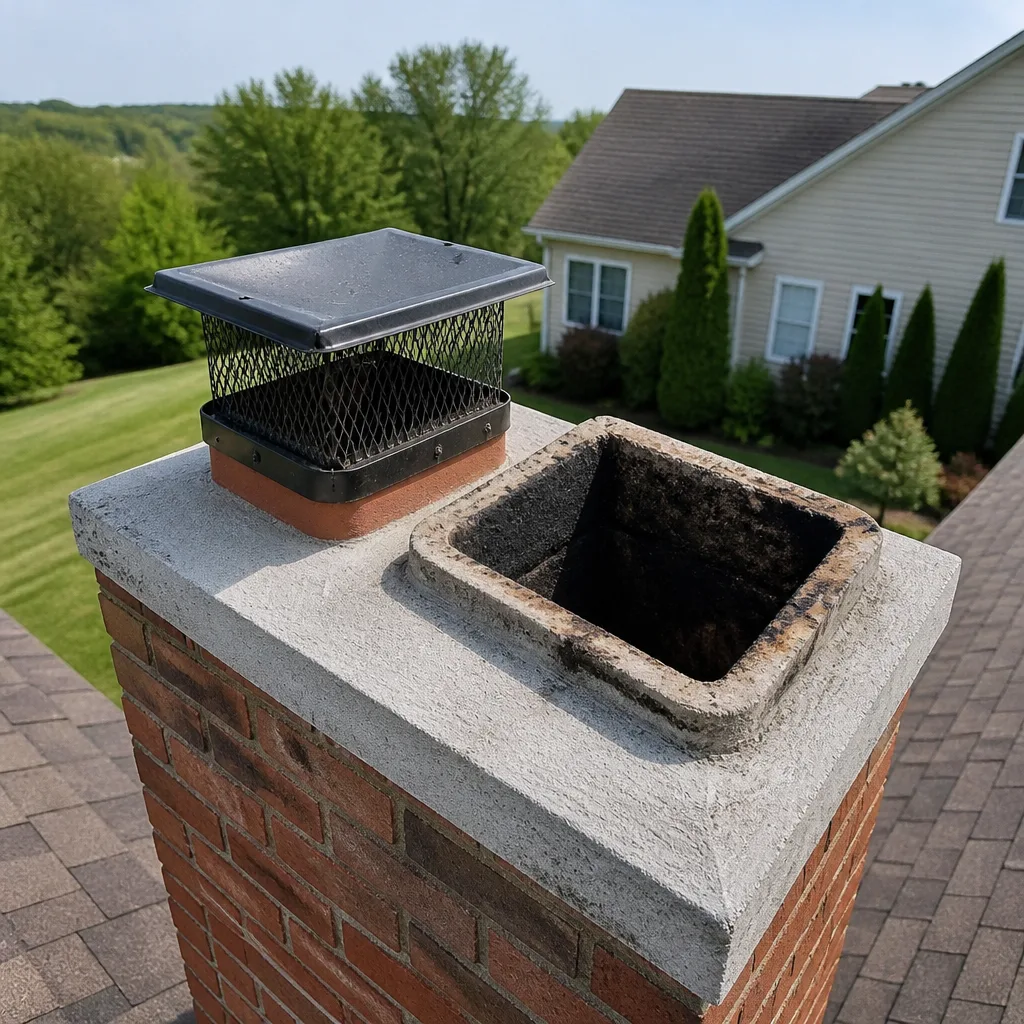
 Sweep & inspection
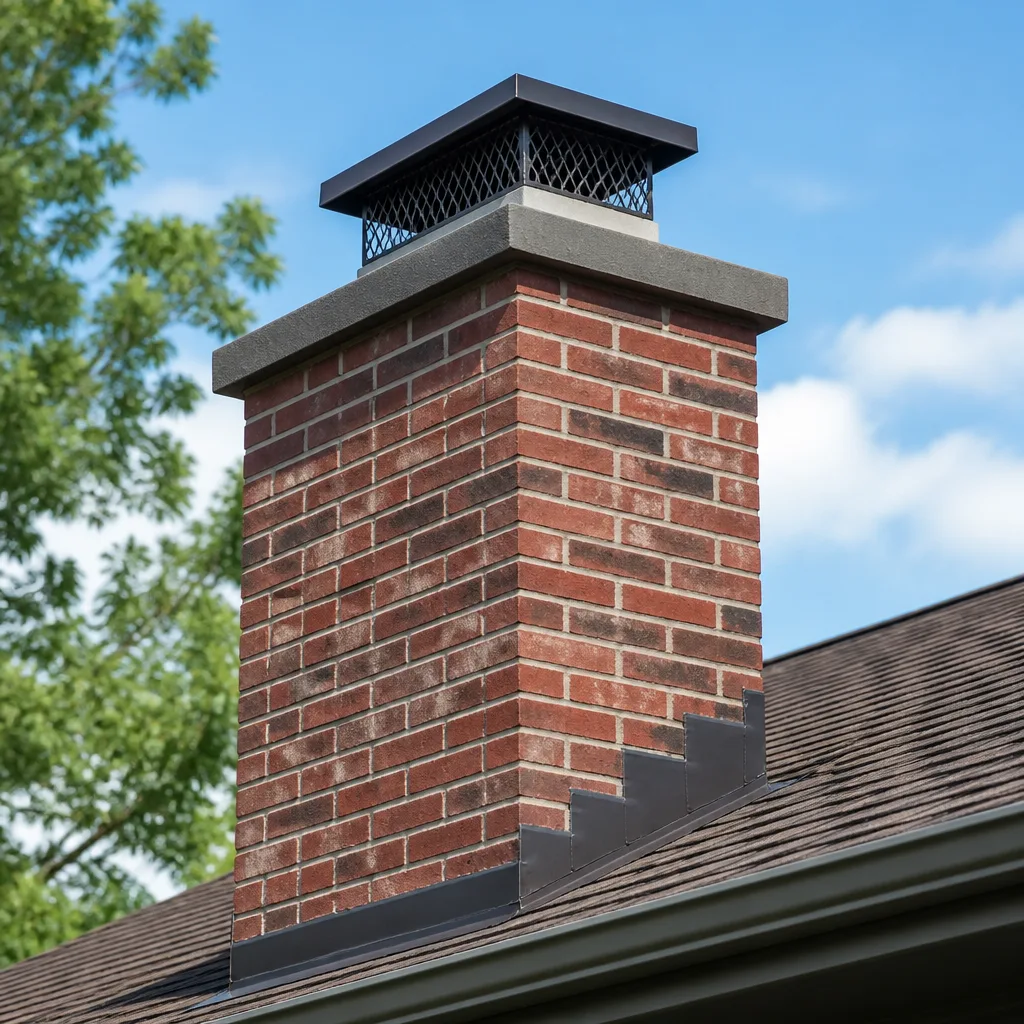 Caps & crowns
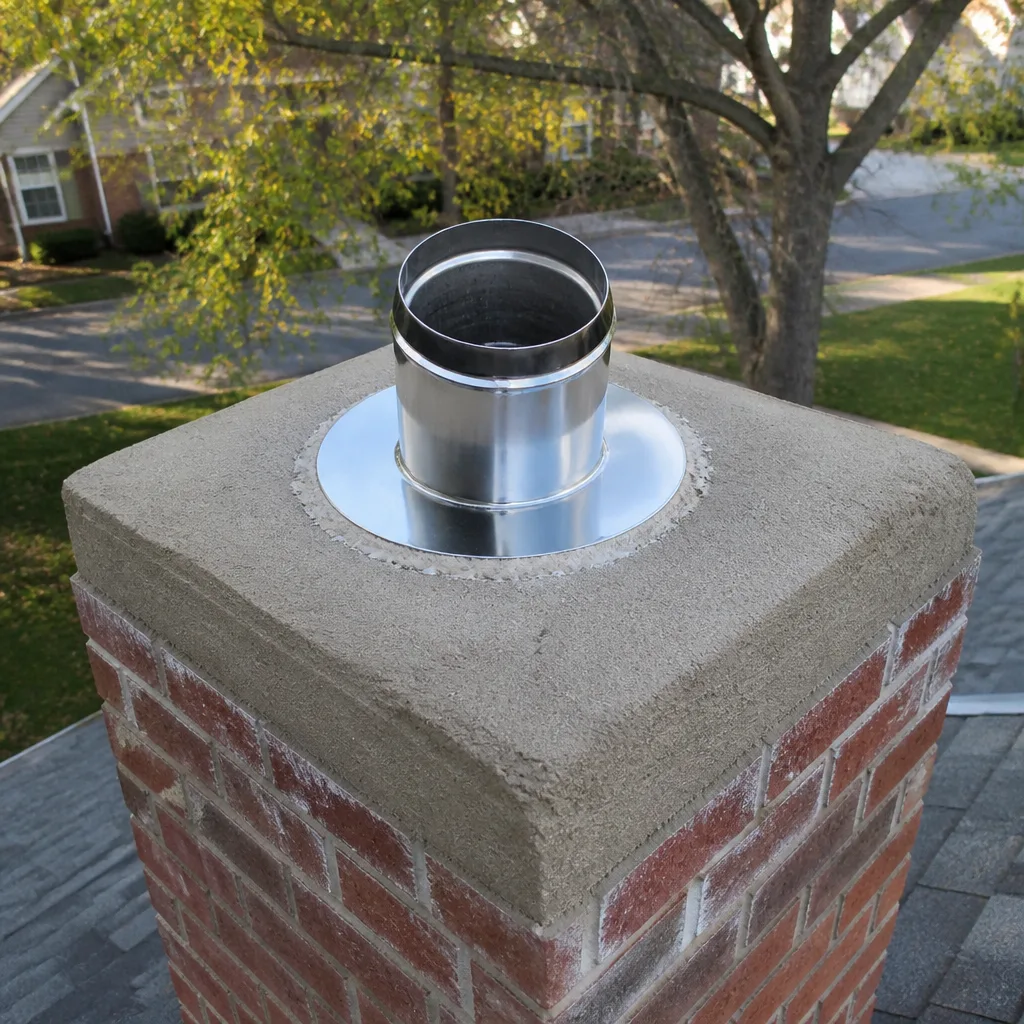 Flue relining
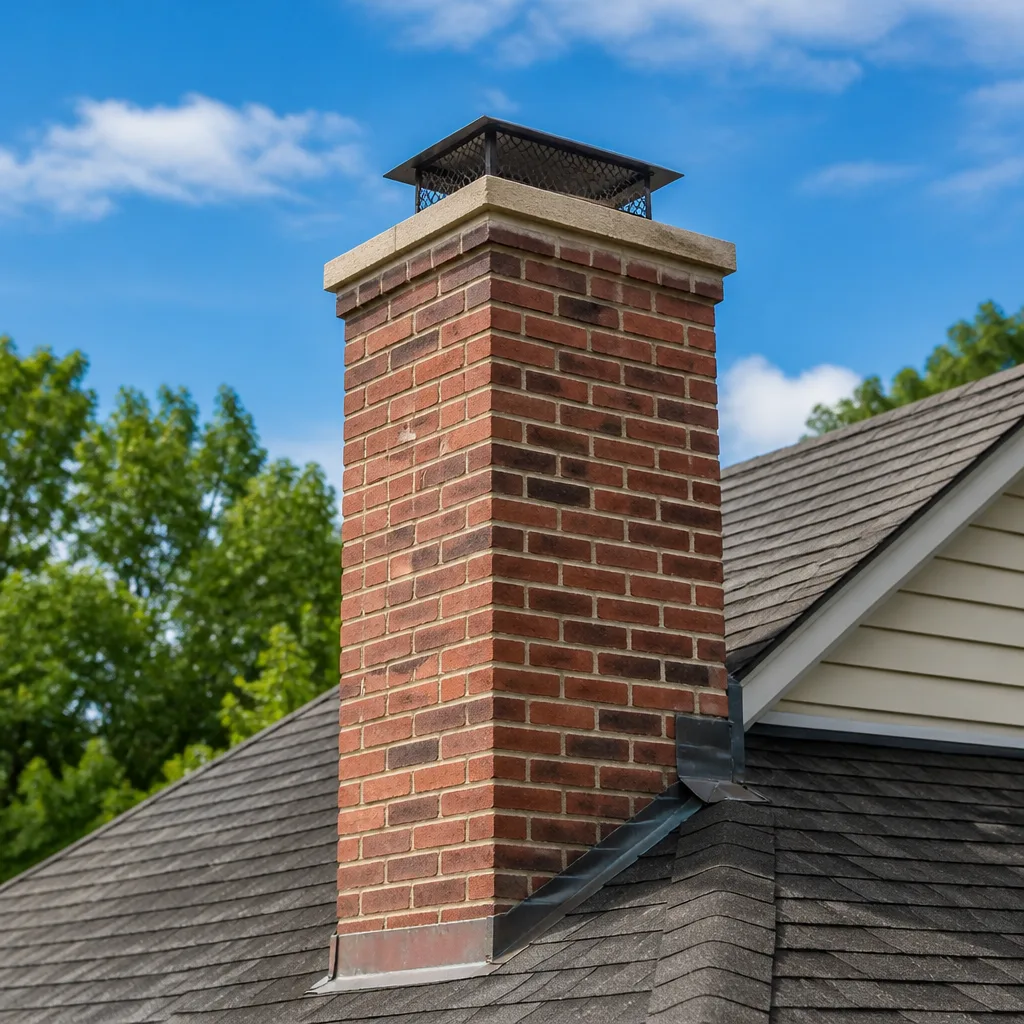 Masonry repair
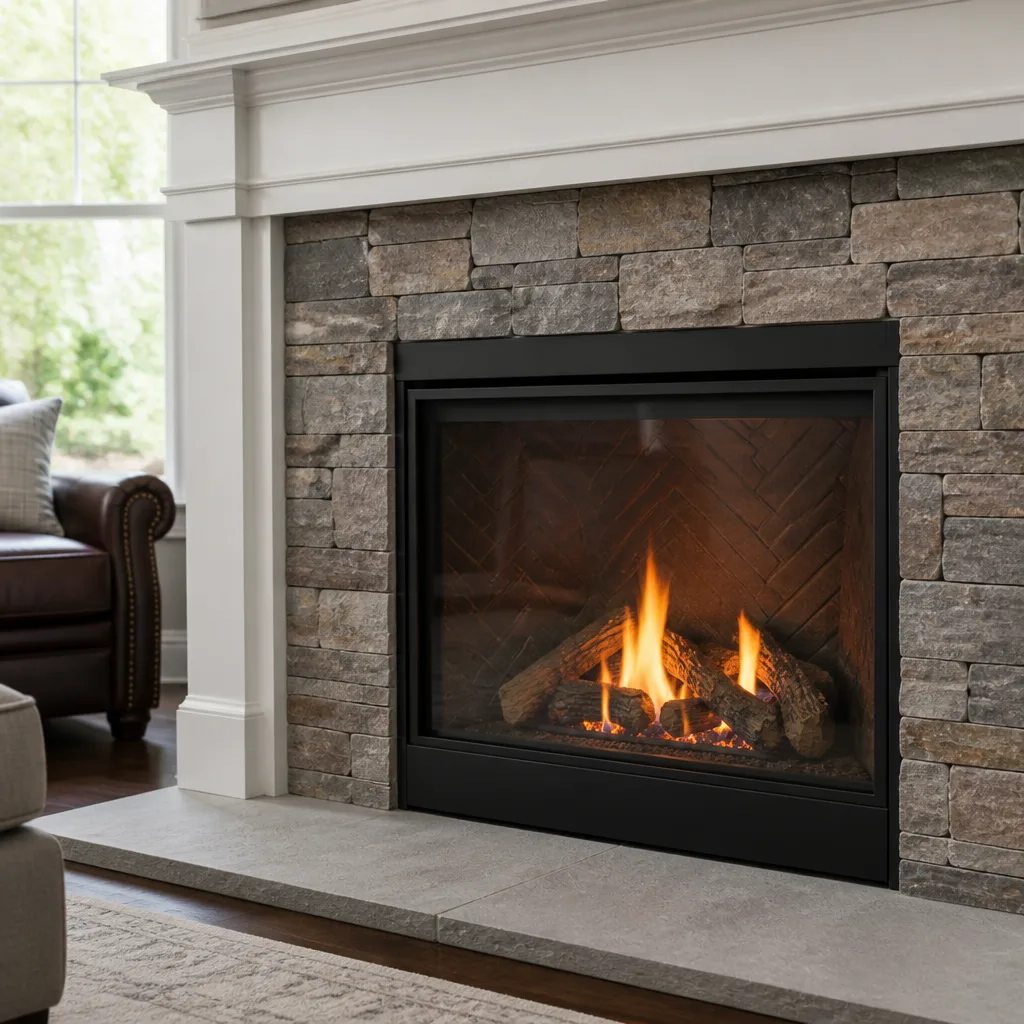 Gas fireplace service
Level 1 sweep and inspection to the NFPA 211 annual standard - flue, crown, cap, and flashing checked and photographed
Chimney sweep logs do not sweep chimneys. They loosen some creosote - which then falls where a brush and vacuum still have to collect it.
Trusted Chimney Repair for East Village Homeowners
Water gets into masonry through the smallest gap, and in East Village’s stock of 19th-century walk-ups and tenements, that gap is usually already there. A hairline crack in a crown, a flashing seam that pulled loose, a brick face that has gone soft from decades of freeze-thaw cycles – any one of these lets meltwater and rain soak into the chimney, where it quietly opens the joints from the inside. By the time a stain shows on a ceiling or a parged face starts falling off, the damage has been working for a while. We handle the full chimney system, from the firebox to the crown, so the repair gets done by the same people who inspected it. Our technicians have up to 9 years of experience, and we specify professional-grade materials from brands like HeatShield and DuraFlex rather than whatever’s on hand. Call (844) 443-3695 and we’ll set up a free estimate.
What Our Chimney Repair Service Includes
Repair work on an East Village chimney almost never means one thing. A masonry stack on a shared roofline is weathering at several different rates at once, and the honest answer to “what needs fixing” is a list, ordered by what’s urgent and what can safely wait. Here’s what each part of the repair scope actually involves.
Mortar Repointing
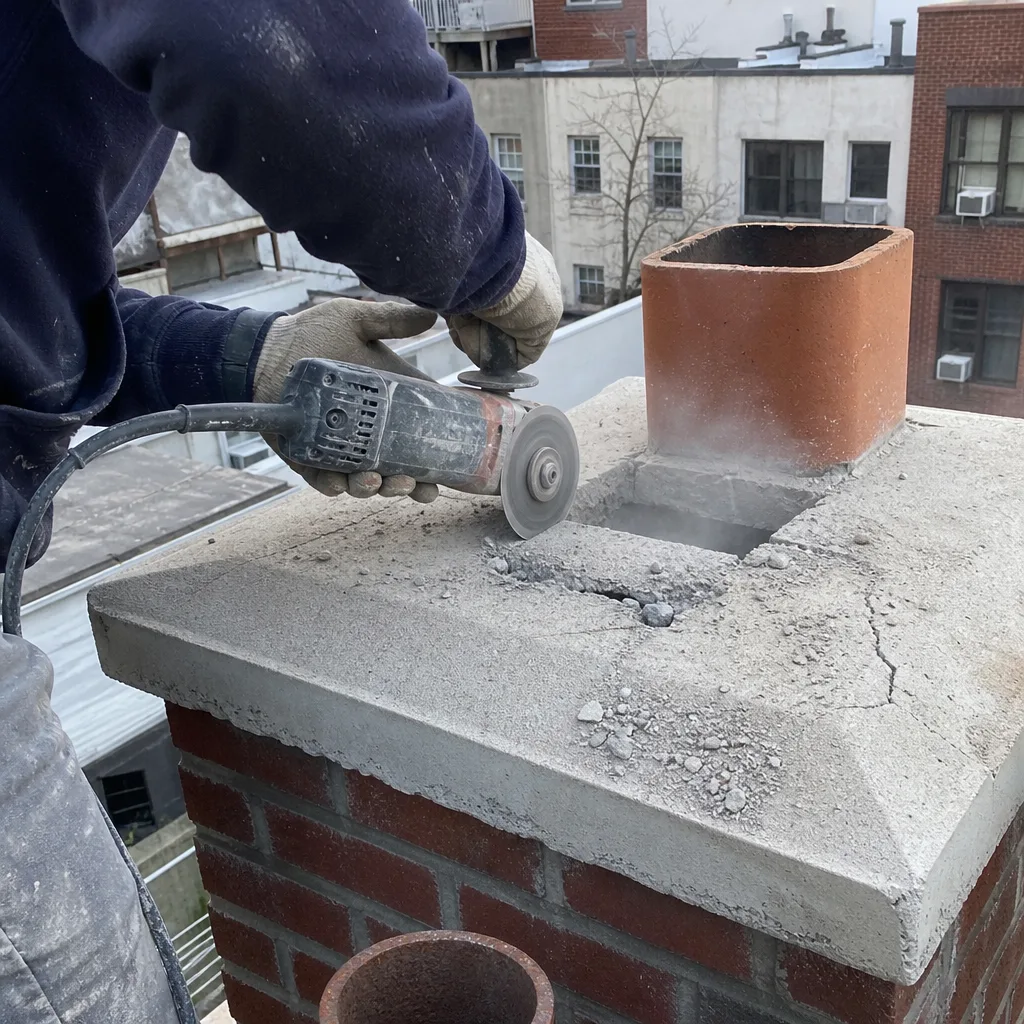
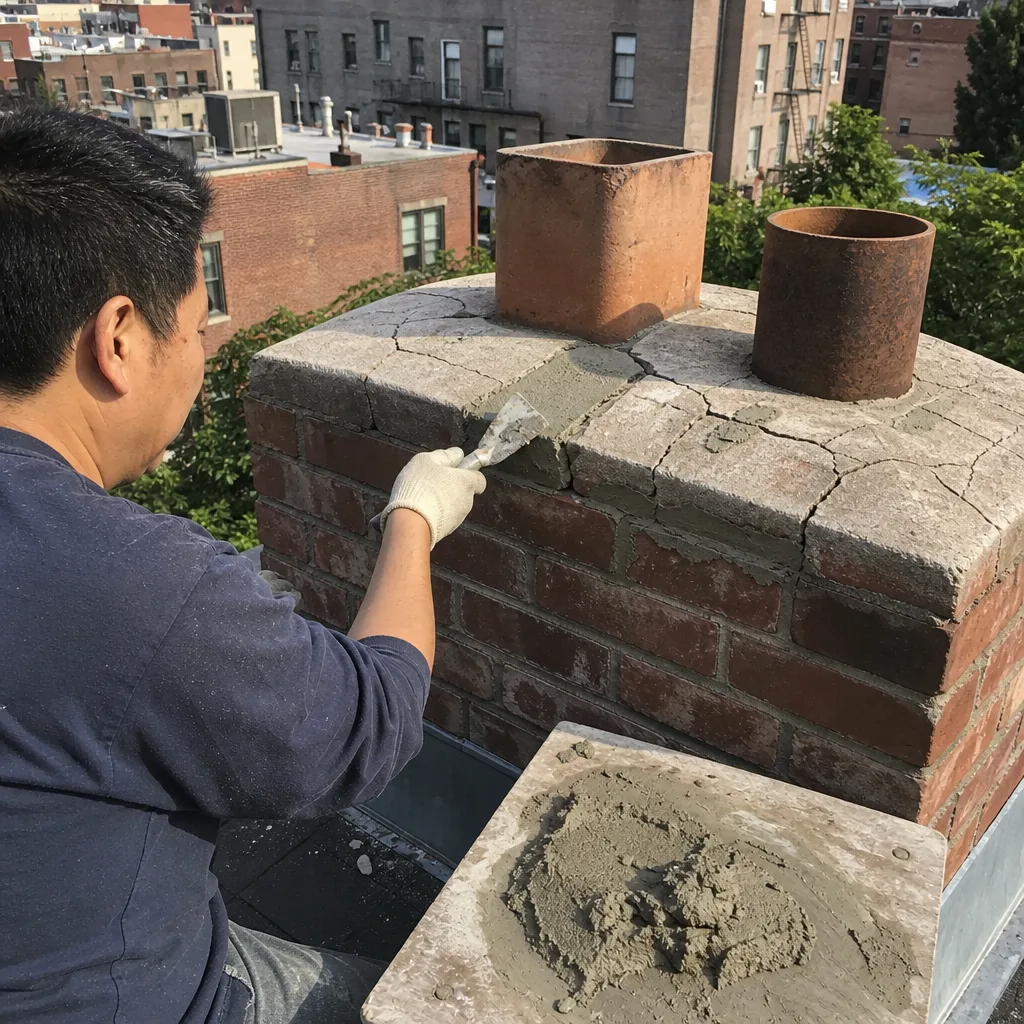
Repointing is the replacement of the mortar joints between bricks, and it’s the single most common repair on older chimneys. Mortar is deliberately softer than brick so it sacrifices itself first, which means joints erode over years while the brick stays intact behind them. When the joints recede far enough that a fingertip can feel the gap, water gets a direct path into the wall. We grind out the deteriorated mortar to a consistent depth and repack it with a matching mix, so the new joints move and weather in step with the surrounding masonry.
Spalling Brick Repair
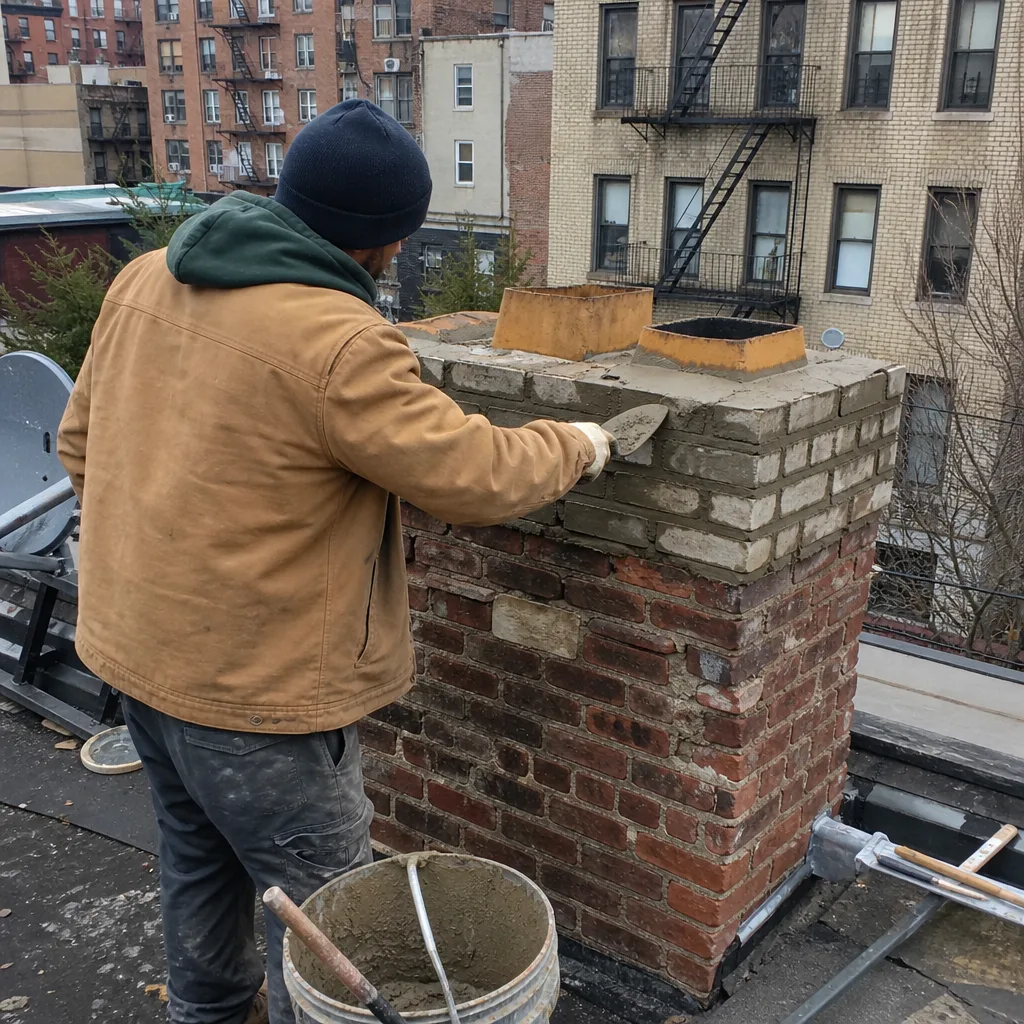
Spalling is when a brick face breaks off, flakes, or crumbles, usually because trapped moisture froze and expanded behind it. You’ll see it as brick dust on the roof, a rough patch, or a face sitting proud or recessed from its neighbors. Spalling brick can’t be saved once the face has gone; the fix is cutting out the failed units and replacing them with brick that matches the original in size, color, and porosity. We match existing brick as closely as the local supply allows and bed the replacements so they don’t become the next weak point.
Chimney Waterproofing
Waterproofing is a breathable sealer applied to the masonry after repairs are complete and the surface has cured. It’s the step that protects the work you just paid for. The sealer keeps bulk water out of the brick while still letting the wall dry from the inside, which matters because trapping moisture behind a coating causes exactly the spalling it was meant to prevent. We treat the full stack rather than spot-coating the visible face, since the sides you can’t see from the ground are usually the ones taking weather.
Flashing Repair
Flashing is the metal and sealant system that seals the joint where the chimney meets the roof. It’s the number one source of chimney leaks, and it fails silently, because a flashing leak rarely shows up on the chimney itself; it runs along the roof deck and shows up as a ceiling stain a room or two away. We reset or replace the step and counter flashing, tie it into the roofing membrane properly, and check the joint from both the roof side and the flue side. A repaired flashing joint is one of the least expensive fixes on a chimney and one of the highest-value ones.
Chimney Rebuilding
Some stacks reach the point where patching is throwing money at a wall that’s already lost its structure – typically the top courses above the roofline, where freeze-thaw does the most damage. A rebuild means taking the stack down to sound masonry and laying it back up, matching the original bond and dimensions and adding a new crown on top. We assess honestly whether a rebuild is necessary or whether repointing and waterproofing will genuinely hold; if it will hold, we say so.
Tuckpointing
Tuckpointing is the finishing step after repointing, where a fine mortar line is worked over the joint to give it a clean, uniform profile and a slightly different tone from the field brick. It’s partly cosmetic and partly structural: a tightly tooled joint sheds water better than a roughly finished one. We use it where the chimney face stays visible after repair – a lot of East Village stacks are seen from the courtyard or the roofline next door – and where a homeowner wants the masonry to read as original work.
Styles & brands we work with
- Sweep & inspection
- Caps & crowns
- Flue relining
- Masonry repair
- Gas fireplace service
Brands We Service for Chimney Repair
We work with professional-grade chimney materials, and that matters more on repair work than most homeowners expect. A flue liner compound from HeatShield has to bond to a prepped, correctly sized flue or it fails early; we’re HeatShield-capable, which means we can assess, prep, and apply the system rather than handing the flue off to someone else. DuraFlex liners show up on a lot of the relining and repair jobs we see, and we know where those systems wear, how the connections age, and what a repair consistent with the manufacturer’s spec looks like.
On the cap and top end, Olympia Chimney and Copperfield are the products we specify most often when a repair finishes at the crown – a properly fitted cap is what stops the next round of water and wildlife damage before it starts. Famco venting and top components turn up on a fair share of the gas-fired fireplaces we open up. Whether you have Olympia Chimney or any other make, we can help. We work on the equipment as installed and repair it to spec; we don’t claim to stock or supply parts for any brand.
Signs You Need Chimney Repair Right Now
Chimney problems announce themselves in predictable ways. Here’s what to look for, and what each sign usually means.
- Crumbling mortar or brick dust on the roof. If joints are receding past your fingertip or you find grit collecting around the base of the stack, the masonry is actively eroding. Left alone, the wall loses bearing capacity above the roofline, and the repair gets more involved and more expensive.
- Water stains on ceilings, walls, or the chimney breast. This points hard at flashing or crown failure, and it’s the sign most often misdiagnosed as a roof problem. A stain that appears after heavy rain and dries out later is telling you exactly where water is entering.
- A damaged or missing chimney cap. Birds, squirrels, and rain get straight into the flue without a cap. That’s not cosmetic; a flue full of nesting material is a blocked flue, and a blocked flue is a carbon monoxide hazard if you burn. A cap and crown repair is quick, and it prevents the problems that follow.
- White staining or a chalky film on the brick. Efflorescence means moisture is moving through the masonry and leaving salts behind as it dries. It’s a symptom, not the problem, and it usually points to a missing or failed waterproofing layer and a leak above it.
- A flue that drafts poorly or smells smoky when cold. Cracks in the flue liner or a broken crown can change draft and let combustion gases escape into the structure. Any change in how a chimney draws is worth an inspection before the next burn.
Our Chimney Repair Process – Step by Step
We keep the process structured so you can see what’s being found, understand why it matters, and approve the work with a clear picture of what you’re paying for.
- 1
Inspection and diagnosis. We start with a full inspection of the chimney, checking the exterior masonry, crown, cap, flashing, and the flue interior. Where access allows, a camera inspection lets us photograph the flue lining and see the condition directly. You get the findings, not just a verdict.
- 2
Findings you can see. Cracks, spalled brick, missing flashing, and failed joints get photographed and pointed out before any work is priced. If something doesn’t need repair, we say so, and if it can safely wait a season, we tell you that too.
- 3
Written scope and estimate. You get a written scope covering exactly which repairs are being done, in what order, and with which materials, at a flat estimate agreed before any work is booked. No itemized surprises after the fact.
- 4
The repair itself. Repointing, brick replacement, flashing reset, crown and cap work, and liner resurfacing are all done by a crew that specializes in chimney and fireplace systems. We apply manufacturer-specified systems where the repair calls for them, and we don’t hand the job to a general contractor.
- 5
Final check and handoff. Once repairs are done, we confirm the joints, sealing, and fit are right, and you get a record of what was repaired. If you want to keep a maintenance eye on it, a sweep before the heating season catches small problems before they become big ones.
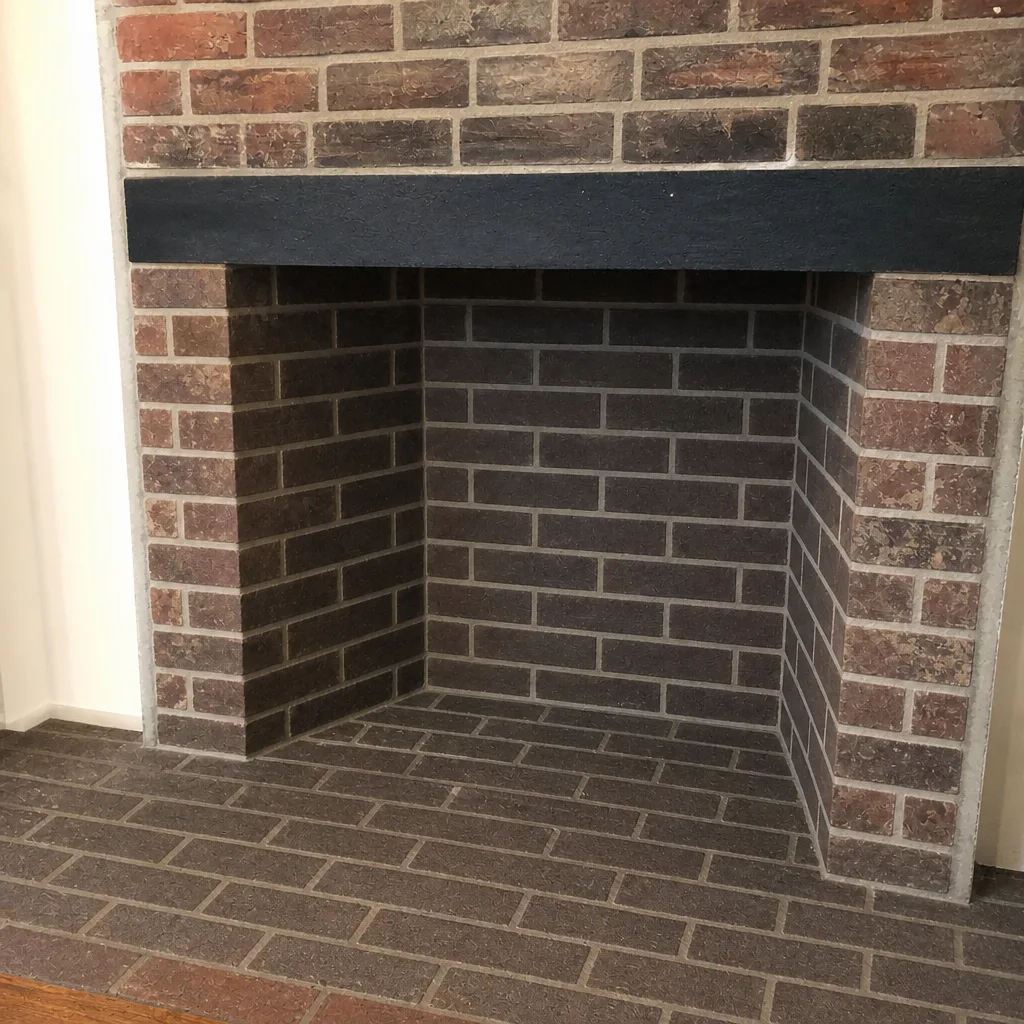
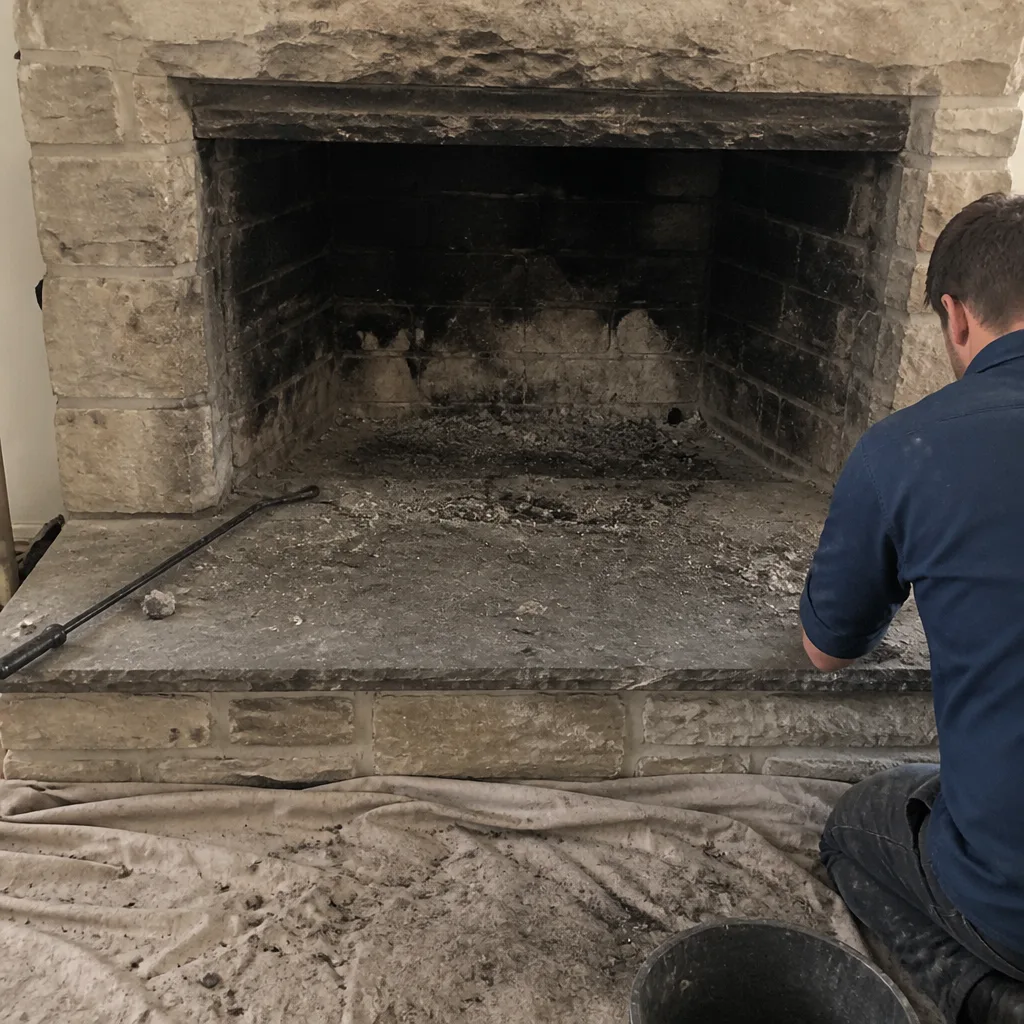
See the difference
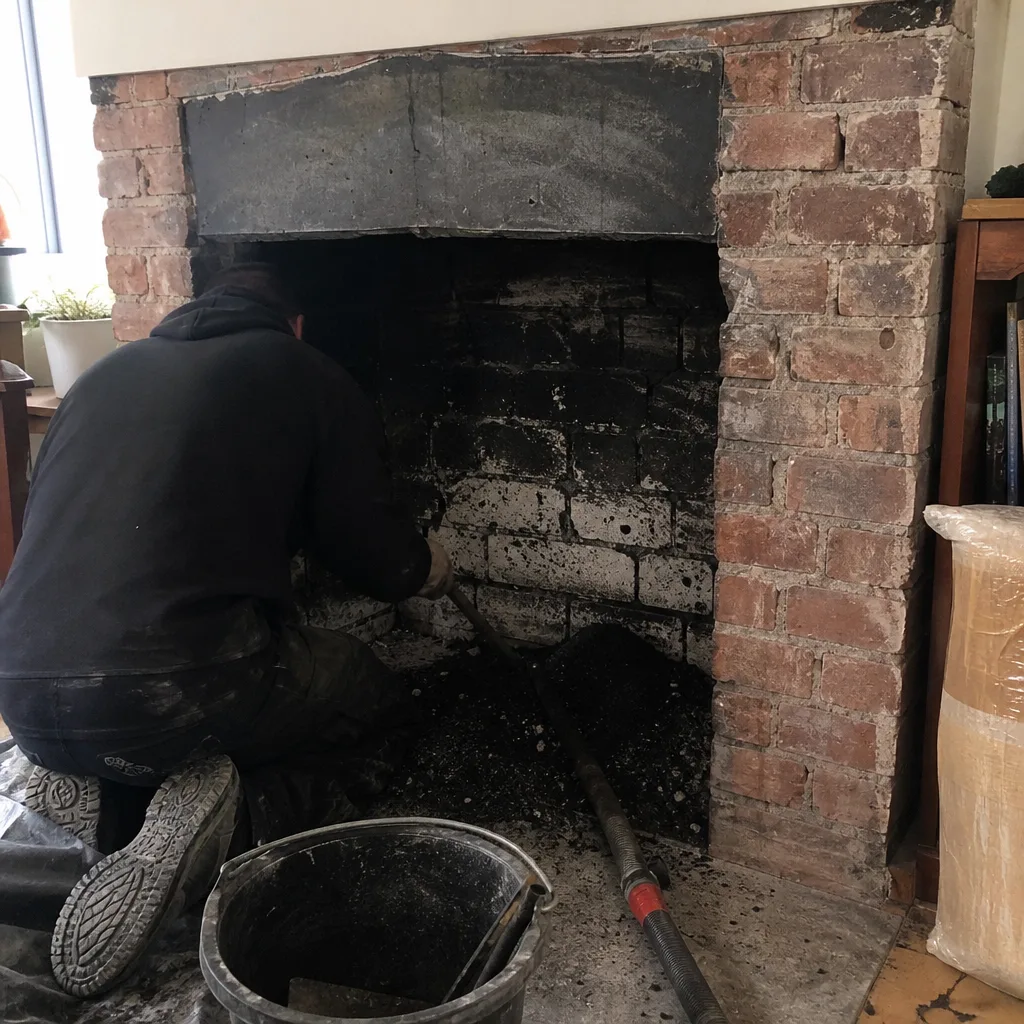 Before
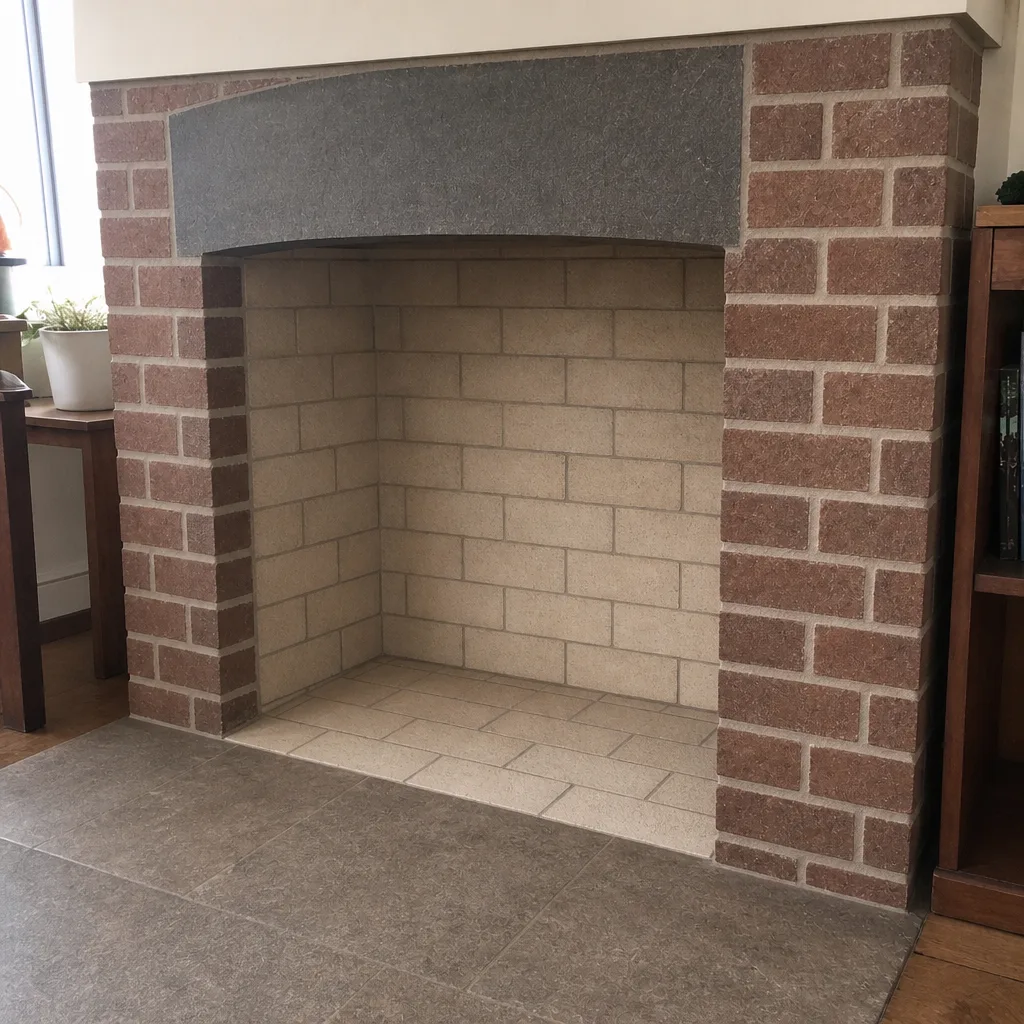 After
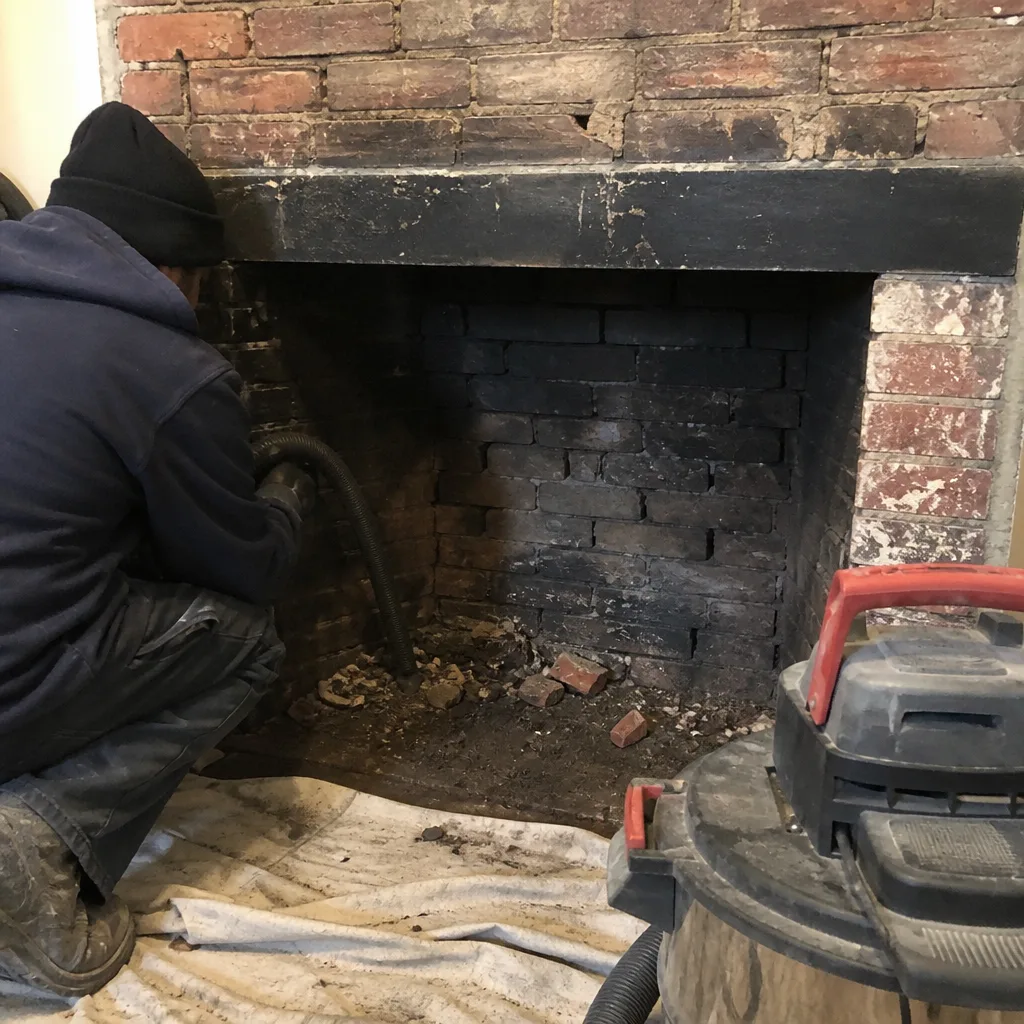 Before
 After
 Before
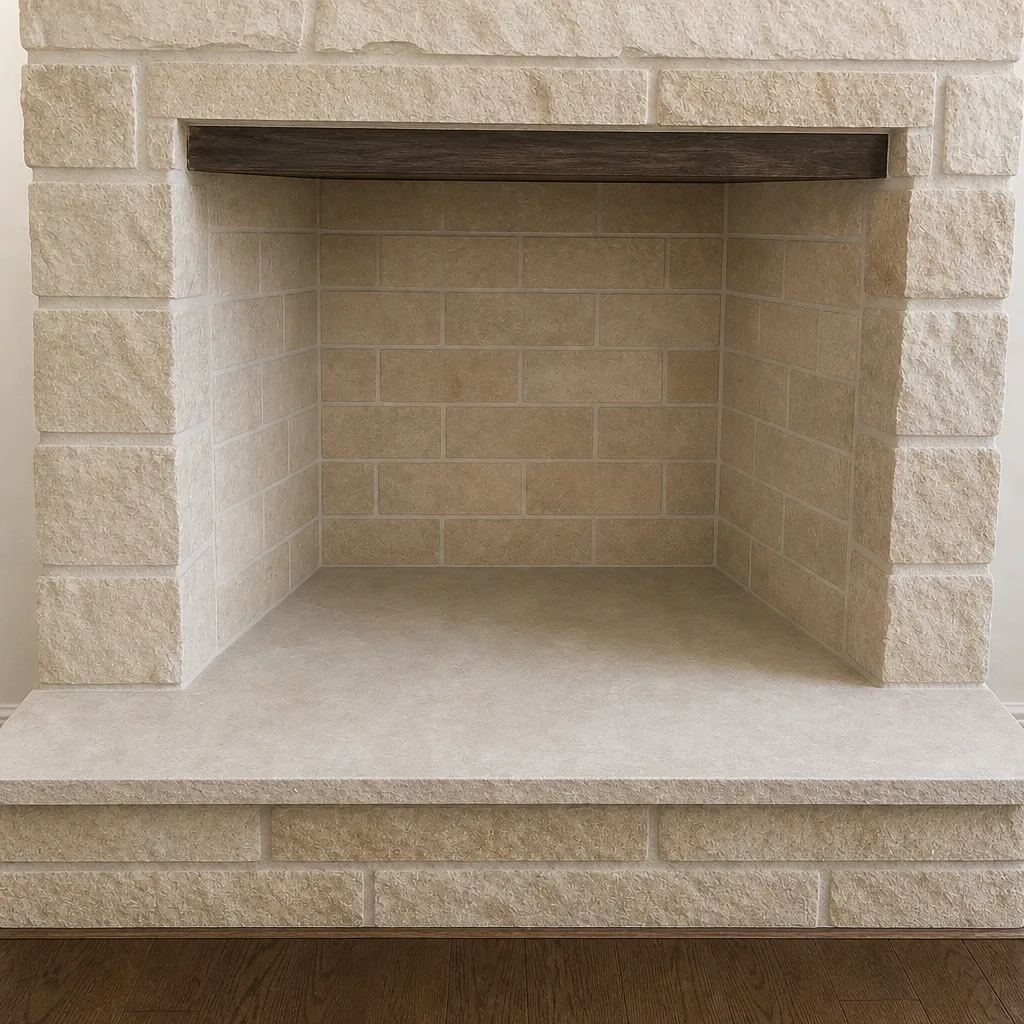 After
How Much Does Chimney Repair Cost in East Village?
Chimney repair costs in East Village are driven by what’s actually wrong and how far it has progressed. Typical estimates for the common scenarios: flashing repair runs roughly $300 – $700 depending on the roof pitch and how much flashing gets replaced; tuckpointing and repointing on the visible stack typically falls in the $500 – $1,500 range depending on square footage and access; spalling brick repair usually runs $400 – $1,200 based on how many units are cut out and whether matching brick is available; a chimney rebuild is the big-ticket option, typically several thousand dollars when the top courses or the whole stack above the roofline have to come down; and waterproofing after repair is usually in the hundreds. These are estimates only; the written estimate sets the final price.
What affects the estimate most: the height and access of the stack (roof access on a tall tenement costs more than a low roofline), whether scaffolding is required, the extent of interior liner damage versus exterior masonry, and whether the repair finishes at the crown with a new cap. To avoid overpaying, get the failure documented before work is priced, and don’t accept a recommendation for a full rebuild if repointing and waterproofing can hold the stack for years. What you get from us is straightforward: a full inspection, a camera view of the flue where access allows, a written scope, and a flat estimate agreed before booking. Fixing the cause once is cheaper than repatching the same spot every couple of years.
Chimney Repair Near East Village – Our Service Area
We connect East Village homeowners with local chimney professionals across lower Manhattan and the neighborhoods around it. Repairs in Gramercy and chimney repair work in Greenwich Village are both close enough that a technician can often see a job in the same run as East Village, with the Lower East Side, Murray Hill, and Kips Bay nearby. Dispatch runs Sunday through Friday, 7am to 7pm, so a repair booked for the next opening gets out fast. You can also read up on our chimney repair scope if you want to see how a typical job is handled before you call.
Serving East Village, NY – Our Local Coverage Area
We serve East Village and nearby communities. Use the map below to see the area we cover. If you’re nearby, we can almost certainly help.
Frequently Asked Questions – Chimney Repair in East Village
Chimney repair is the correction of physical faults in the chimney structure and its components – typically repointing mortar, replacing spalled brick, sealing with waterproofing, resetting flashing, rebuilding failed sections, and resurfacing the flue liner where it’s cracked. It’s distinct from a sweep, which clears soot and creosote; a sweep tells you what’s dirty, and repair tells you what’s wrong and fixes it. We handle both, and we can go from diagnosis to completed repair in one relationship.
Most masonry repairs are done in a day or two. Repointing, tuckpointing, and spalling brick repair on a typical stack usually fit into one visit, and flashing and cap work can often be finished the same day. A full chimney rebuild is a larger project that can span several days depending on access and the height of the stack. We give you a realistic timeline with the written estimate so you can plan around it.
Estimates typically run from a few hundred dollars for flashing or cap repairs up to several thousand for a full rebuild, with common repointing and tuckpointing jobs usually between $500 and $1,500. The written estimate sets the final price, and it’s agreed before any work is booked. Call (844) 443-3695 for an exact quote – estimates are free.
Yes. We’re HeatShield-capable, so we can assess, prep, and apply the HeatShield flue resurfacing system where the flue condition calls for it, and we work on DuraFlex liner installations as well as Olympia Chimney and Famco components. We repair the equipment as installed to the manufacturer’s spec, and if a system is past the point of repair, we’ll tell you rather than sell you a patch that fails in a year. We don’t claim to be a dealer or to stock parts for any brand.
Same-day repair is often possible when the visit is diagnostic and the fault turns out to be small – a loose flashing joint, a cap, a minor crown fix. We answer 24/7, and fast dispatch runs from 7am to 7pm, Sunday through Friday; a call outside dispatch hours is booked into the next opening, Sunday through Friday, 7am to 7pm. Heavier masonry work is scheduled so it can be done properly and with the materials the job requires.
We stand behind the repairs we complete, and the scope of the warranty is spelled out in writing with the estimate so you know exactly what’s covered. Work that involves installed systems like HeatShield or DuraFlex follows the manufacturer’s application requirements, which is what keeps a repair sound over time. If something we repaired fails, call us and we’ll look at it.
Clear access to the chimney from inside the home, and make sure the fireplace or wood stove is cool and hasn’t been used recently. Secure pets and move fragile items away from the hearth area, and let us know about any roof access restrictions, shared driveway rules, or building management requirements ahead of the visit. If the work is exterior-focused, there’s little for you to do beyond that, and we’ll tell you what to expect when we confirm the appointment.
Schedule Your Chimney Repair Service in East Village Today
If your chimney has a leaking flashing joint, crumbling joints, or a stack that’s lost brick, the longer it waits through another freeze-thaw cycle, the more the repair grows. Call (844) 443-3695 for a free estimate. We inspect, diagnose, and quote in writing before any work is booked, and we’ll fix what needs fixing. We answer 24/7, and fast dispatch runs from 7am to 7pm, Sunday through Friday. You’ll know what’s wrong and what it costs before you commit.
Written by the team at Chimney Sweep East Village.